

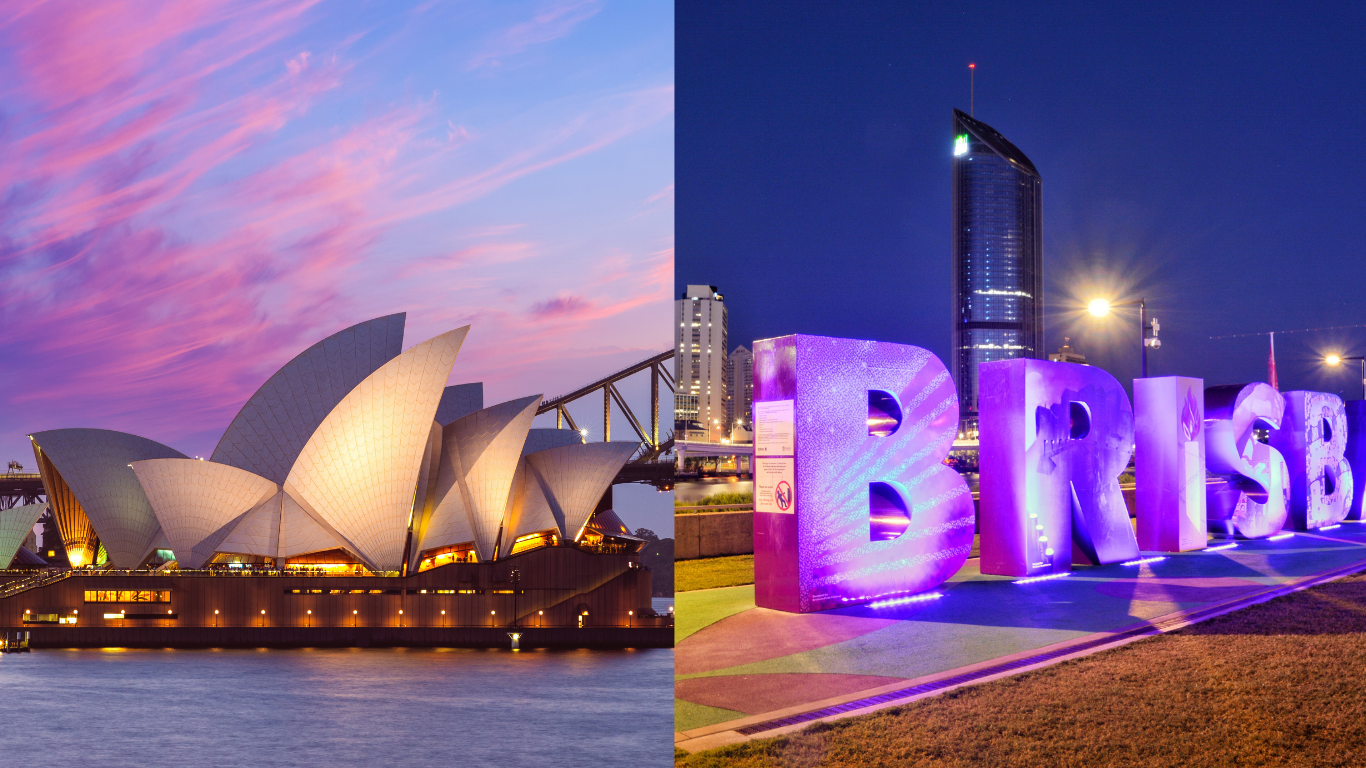
There’s no single “best” city among Brisbane, Sydney, and Melbourne, each wins on a different priority: Brisbane on cost and life style, Sydney on job market, Melbourne on balance and course diversity. On the visa side, all three are treated identically, none of them qualifies as a regional area, so your choice comes down to lifestyle and budget rather than visa advantage.
Choosing where to study in Australia usually comes down to Brisbane, Sydney, or Melbourne, the country’s three biggest hubs for international education. All three sit on the same Subclass 500 Student Visa framework, so the visa itself doesn’t change based on your postcode. What does change is your living cost, your financial evidence, and your day-to-day lifestyle. There’s also one detail that most city comparisons skip entirely: none of these three cities count as “regional” for post-study visa purposes, and that single fact can reshape your entire migration timeline. This guide compares Brisbane, Sydney, and Melbourne side by side, then walks through exactly how each choice plays into your Subclass 500 and Temporary Graduate (485) visa planning.
Which City Has Better Universities and Courses: Brisbane, Sydney, or Melbourne?
By overall global ranking, Sydney now holds Australia’s single highest-ranked university, Melbourne holds the next two spots, and Brisbane’s University of Queensland is the strongest-ranked institution outside Sydney and Melbourne, so “better” comes down to the specific university and course you’re targeting rather than the city as a whole.
According to the QS World University Rankings, the 2027 edition released 18 June 2026, here’s how the main universities in each city compare globally:
| University | City | Global rank (QS 2027) |
| The University of New South Wales (UNSW Sydney) | Sydney | #19 |
| The University of Melbourne | Melbourne | #22 |
| The University of Sydney | Sydney | #28 |
| Monash University | Melbourne | #31 |
| The University of Queensland (UQ) | Brisbane | #40 |
| University of Technology Sydney (UTS) | Sydney | #87 |
| RMIT University | Melbourne | #119 |
| Griffith University | Brisbane | #230 |
| Queensland University of Technology (QUT) | Brisbane | #240 |
UNSW’s rise to #19 makes it Australia’s top-ranked university for the first time, edging out the University of Melbourne, which still climbed globally to #22 despite slipping to second nationally. Sydney and Melbourne both host multiple universities in the global top 40, giving them the deepest bench of highly ranked options between them. Brisbane’s The University of Queensland (UQ), at #40, is the strongest single institution outside Sydney and Melbourne, and Brisbane’s other two major providers, QUT and Griffith University, also sit in the 250 best universities globally.
- Brisbane: UQ leads in health sciences, engineering, environmental science, and agriculture. QUT is known for digital innovation and industry-linked courses. Griffith is strong in health, criminology, and creative industries.
- Sydney: UNSW and the University of Sydney both post strong results in engineering, law, business, and health sciences. UTS is known for technology and design.
- Melbourne: The University of Melbourne is strongest in medicine, law, and the humanities. Monash performs well in pharmacy, engineering, and business. RMIT specialises in design, architecture, and industry-focused degrees.
Rankings shift with each edition, so treat this table as a snapshot rather than a fixed hierarchy. Check the current QS World University Rankings before finalising a shortlist.
Course strength should weigh more heavily than city prestige when you are comparing CRICOS-registered providers. Your Temporary Graduate visa outcomes depend far more on your qualification level and nominated occupation than on which of these three cities issued your degree.
Which City Is Cheaper for International Students: Brisbane, Sydney, or Melbourne?
Brisbane is the most affordable of the three major cities, Melbourne sits in the middle, and Sydney is consistently the most expensive city in Australia for international students.
Rent drives most of the difference. Indicative ranges below are compiled from multiple 2026 student cost guides for illustration (Source: various student cost guides, 2026, internal review only), but the Study Australia Cost of Living Calculator, run by the Australian Government, is the authoritative tool for current, city-specific estimates and should be the figure you actually budget against.
| Monthly expense (AUD) | Brisbane | Sydney | Melbourne |
| Shared rent | ~$1,000–1,200 | ~$1,500+ | ~$1,200–1,300 |
| Groceries | $200–350 | $250–400 | $250–380 |
| Public transport | 50c on every journey | $150–200 | $120–180 |
| OSHC (annual) | $600–800 | $600–800 | $600–800 |
These ranges are approximate. Run your own numbers through the Study Australia Cost of Living Calculator before you finalise a budget or financial evidence file.
The Department of Home Affairs sets one national financial capacity benchmark for every Subclass 500 applicant, regardless of city: at least AUD 29,710 a year in living costs. That figure is a floor, not a city-specific target. If your realistic monthly spend in Sydney runs meaningfully higher than that floor, per the Study Australia calculator, your financial evidence should reflect that higher number rather than the bare visa minimum.
Public transport is one area where Brisbane has a genuine, government-set edge. TransLink, Queensland’s state transport authority, charges a flat 50-cent fare on every journey, regardless of distance. Transport for NSW’s Opal network and Public Transport Victoria’s Myki network both charge distance-based adult fares for most international students, and Victoria’s International Student Travel Pass offers a 50% discount for eligible students, but neither matches Queensland’s flat concession rate.
Which City Offers the Best Lifestyle and Job Market for Students: Brisbane, Sydney, or Melbourne?
All three cities operate under the same national part-time work limit, so the real difference between them comes down to climate, culture, and which industries are actively hiring.
Every Subclass 500 holder, in any of the three cities, can work up to 48 hours per fortnight during term and unlimited hours during scheduled course breaks. That is a national Home Affairs condition, not something that changes by location. Pay rates are also set nationally: the Fair Work Ombudsman confirms the National Minimum Wage is AUD 26.44 per hour from 1 July 2026, and most casual student jobs in hospitality and retail sit at or above this floor once award loadings apply, regardless of which of the three cities you work in.
Where the cities genuinely diverge is opportunity by industry:
- Brisbane: construction and civil infrastructure roles are in high demand as the state delivers its Brisbane 2032 Olympic Plan, the largest infrastructure investment in Queensland’s history, according to the Queensland Government.
- Sydney: the strongest part-time and graduate job market for finance, technology, and professional services, in line with its position as Australia’s biggest commercial hub.
- Melbourne: consistently strong in healthcare, education, and creative industries, backed by one of the country’s most active casual hospitality and events sector.
Climate and culture matter too, and this is genuinely a personal-fit decision rather than a right-or-wrong one. See the next section for a direct climate comparison between the three cities.
Which City Has the Best Weather and Climate: Brisbane, Sydney, or Melbourne?
Brisbane has the warmest, most consistent climate of the three, Sydney sits comfortably in the middle, and Melbourne has the coolest and most changeable weather.
According to the Bureau of Meteorology, the Australian Government’s official weather authority, the three cities sit in genuinely different climate zones rather than just having minor day-to-day differences.
| Climate factor | Brisbane | Sydney | Melbourne |
| Climate type | Subtropical | Temperate | Temperate (oceanic) |
| Typical summer high | Around 29°C | Around 26°C | Around 25°C |
| Typical winter high | Around 21°C | Around 17°C | Around 13°C |
| Rainfall pattern | Humid, summer-heavy | Year-round, coastal | Lower annual rainfall, more day-to-day variability |
Brisbane rarely sees genuinely cold weather. Winters stay mild enough for short sleeves on many days, though summers bring more humidity than the other two cities. Sydney sits closer to the middle, with warm but not extreme summers and winters that rarely call for heavy layers. Melbourne is known nationally for how quickly its weather can shift within a single day, and its winters are noticeably cooler and greyer than Brisbane’s or Sydney’s, even though its summers can still produce genuine heat.
If you’re sensitive to cold or simply prefer warm weather most of the year, Brisbane is the clearest choice of the three. If you enjoy a genuine change of seasons, including cooler, moodier winters, Melbourne suits that better. Sydney lands in between on both counts.
Which City Is Best for Your Subclass 500 Student Visa Application: Brisbane, Sydney, or Melbourne?
Your visa process and eligibility are identical no matter which of the three cities you choose. The real difference is how much financial evidence you’ll want to show to comfortably clear the Genuine Student assessment.
The core Subclass 500 requirements apply nationally, regardless of city:
- Enrolment at a CRICOS-registered institution
- A Genuine Student (GS) response, which replaced the earlier Genuine Temporary Entrant test
- Overseas Student Health Cover for the full length of your visa
- English language evidence meeting Home Affairs’ minimum bands
- Financial capacity of at least AUD 29,710 a year (as of 01 July 2026), per the Department of Home Affairs
The visa application charge has changed more than once since 2024, and reported figures vary depending on when a source was last updated. Confirm the exact current fee directly on immi.homeaffairs.gov.au before you apply, rather than relying on a third-party figure that may already be out of date.
City choice does affect how convincing your financial evidence looks to a case officer, even though it does not affect eligibility itself. If you are applying to study in Sydney, where realistic living costs sit well above the national minimum, funds that only just clear AUD 29,710 make for a thinner file than funds that comfortably cover Sydney-level rent. Brisbane applicants generally have more room to work with here, since the gap between the visa minimum and realistic costs is narrower.
Are Brisbane, Sydney, or Melbourne Regional Areas for Your Graduate (485) Visa?
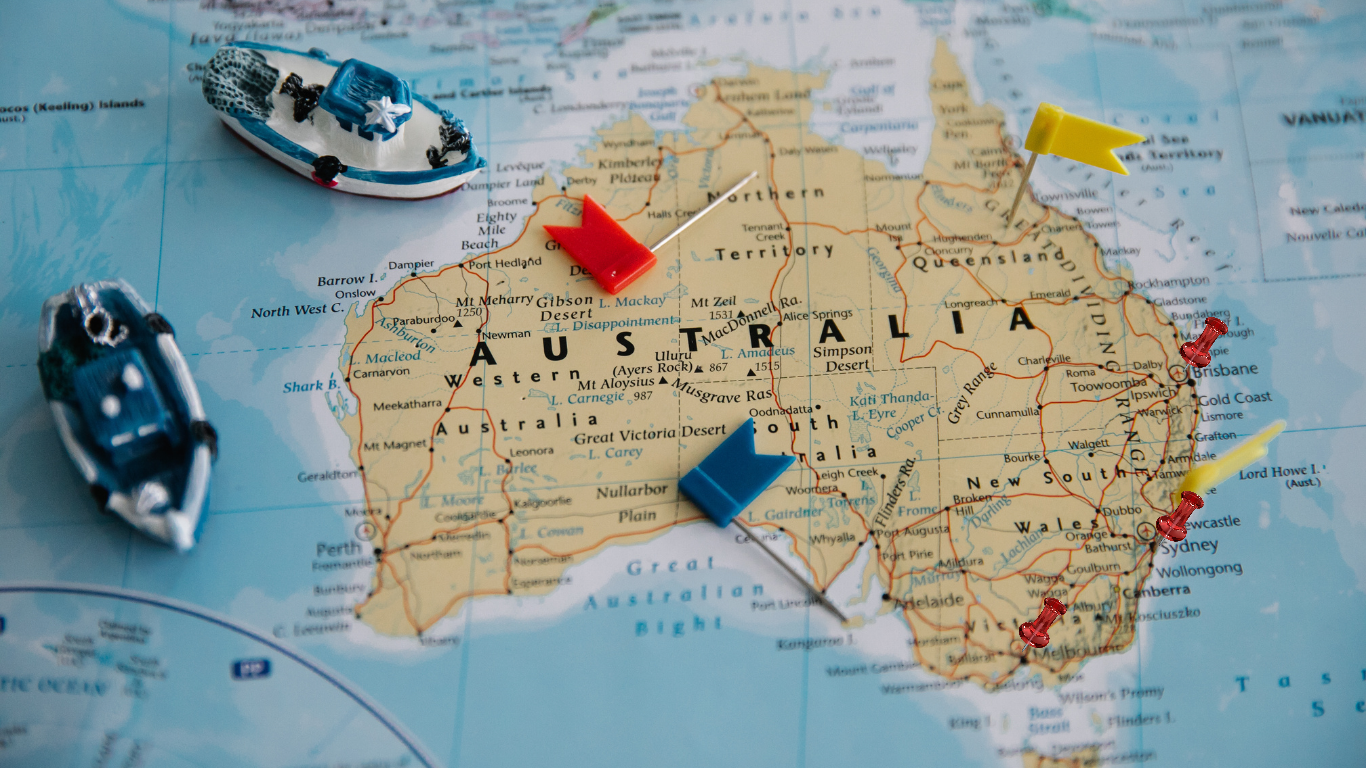
No. Under the Department of Home Affairs’ regional classification framework, Sydney, Melbourne, and Brisbane are all Category 1 major cities, and none of them qualifies for the Temporary Graduate visa’s regional bonus.
This is the detail most city comparisons skip, and it matters more than students often realise. The regional bonus can add one to two extra years onto a second Temporary Graduate (485) visa, but only for graduates who studied and lived in a genuinely designated regional area. According to the Department of Home Affairs’ regional postcode classification, Perth, Adelaide, the Gold Coast, the Sunshine Coast, Canberra, Newcastle/Lake Macquarie, Wollongong/Illawarra, Geelong, and Hobart all qualify for this bonus despite being significant cities in their own right. Sydney, Melbourne, and Brisbane do not, regardless of which university or suburb you study in within those cities.
If you study in any of these three cities, your first 485 visa still runs for a standard term based on your qualification level, generally ranging from around two years for a bachelor’s degree up to four years for a doctoral degree, per the Study Australia Temporary Graduate visa guide, but you will not have access to the Second Post-Higher Education Work stream’s regional extension. Studying in Brisbane, Sydney, or Melbourne does not disadvantage you relative to each other on this point, since all three sit in exactly the same category. The disadvantage only appears if you compare any of the three against a genuinely regional city.
If extending your post-study work rights through a regional bonus matters to your migration plan, that is worth discussing with a registered migration agent before you commit to a Brisbane, Sydney, or Melbourne enrolment. It is a far easier decision to make before your Subclass 500 is lodged than after.
Brisbane vs Sydney vs Melbourne: Full Comparison Table
| Factor | Brisbane | Sydney | Melbourne |
| Relative cost of living | Lowest of the three | Highest | Middle, closer to Sydney |
| Leading universities | UQ (#40), QUT, Griffith | UNSW (#19), USyd (#28), UTS | UniMelb (#22), Monash (#31), RMIT |
| Strongest fields | Health, engineering, environmental science, agriculture | Business, law, finance, tech | Medicine, arts, design, education |
| Part-time job strength | Construction, hospitality, trades | Finance, tech, professional services | Healthcare, education, creative industries |
| 485 regional bonus eligible | No (Category 1) | No (Category 1) | No (Category 1) |
| Climate | Subtropical, warm year-round | Temperate, coastal | Temperate, four distinct seasons |
Which City Should You Choose?
Match the city to your priorities rather than to reputation alone. Budget and an outdoor lifestyle point toward Brisbane, career prestige and networking point toward Sydney, and course diversity with cultural life points toward Melbourne.
- Choose Brisbane if: you want the lowest cost of living of the three, you are studying health sciences, engineering, or a construction-linked field, or you prefer a warmer climate year-round.
- Choose Sydney if: you are prepared for the highest cost of living in exchange for the strongest finance, tech, or law job market and the most globally recognised university names.
- Choose Melbourne if: you want a balance between cost and opportunity, you are drawn to medicine, arts, design, or education, and you value one of the country’s largest international student communities.
Whichever city you choose, remember that none of the three changes your regional visa status. Don’t let assumptions about “which city counts as regional” factor into this decision, since all three sit outside that framework equally. If a regional bonus genuinely matters to your long-term plan, that is a separate conversation about actual regional locations, not about picking between Brisbane, Sydney, and Melbourne.
Frequently Asked Questions
Which city is best for international students: Brisbane, Sydney, or Melbourne?
There is no single best city, each wins on a different priority. Brisbane offers the lowest cost of living and the warmest climate, Sydney has the strongest job market and the most globally recognised universities, and Melbourne offers the best balance between cost, course diversity, and cultural life. Your own priorities should decide, not a ranking.
Is Brisbane cheaper than Sydney or Melbourne for international students?
Yes. Brisbane consistently has the lowest cost of living of the three, largely due to lower rent. Sydney is the most expensive, and Melbourne sits in between. Check the Study Australia Cost of Living Calculator for current, city-specific figures before you set your budget.
Which city has better job opportunities for international students after graduation?
It depends on your field. Sydney leads in finance, technology, and professional services. Melbourne is strongest in healthcare, education, and creative industries. Brisbane’s construction and civil infrastructure sector is growing quickly as the state delivers its Brisbane 2032 infrastructure program.
Which city has the best weather for international students?
Brisbane has the warmest, most consistent climate of the three, with mild winters and humid summers. Sydney sits in the middle with mild coastal weather. Melbourne has the coolest and most changeable conditions, though it still gets genuinely hot stretches in summer.
Does studying in Sydney, Melbourne, or Brisbane affect your chances of permanent residency?
Not directly through city choice alone. All three are Category 1 major cities under Home Affairs’ regional classification, so none qualifies for the Temporary Graduate visa’s regional bonus. Your PR pathway depends far more on your occupation, points score, and state nomination strategy than on which of these three cities you study in.
Ready to Choose Your City and Start Your Visa Application?
-> Book a free visa and course consultation with SOL Migration.
Wish to investigate which city suits you most? Book a free course consultation with our experienced team today on 07 3003 1899 or hello@soledu.net
Related reading:
About this article
SOL Edu Content Team
This article was written by the SOL Edu content team, based on official information from education providers, government sources, and industry updates.
Susie Vu
Marketing Specialist at SOL Edu
Susie oversees content quality, SEO strategy, and editorial standards across SOL Edu’s educational resources.
View Susie’s LinkedIn profile
Momo Kuo
Registered Migration Agent
MARN: 1700349
Last updated:13 NOV 2026